

Priorities shaped by your business
We identify what your business depends on so that the most significant risks are addressed first.
Sumatoni builds and develops security across your business: your systems, data, people and working practices. Protection, detection and recovery work towards the same goal: reducing risks and keeping your business running.
Review your security
We identify what your business depends on so that the most significant risks are addressed first.
Access, devices, networks and data are protected by measures that complement each other.
Useful alerts, contacts and initial actions are defined in advance.
Backups and restoration procedures are checked against your business needs.
We define the scope around your business: your IT systems, or both IT and industrial and operational systems (IT/OT). The assessment considers how you work and the impact an incident could have on your operations.
We start with a suitable standard or framework, such as ISO/IEC 27001, CyberFundamentals (CyFun) or the IEC 62443 series for industrial systems. An existing audit report can also provide the starting point.
We assess the gaps between your current situation and that reference, then develop a prioritised action plan. You gain a clear view of the gaps and the actions to take, with risks, dependencies and available resources taken into account.
The environment had limited backup coverage, unmanaged equipment and incomplete documentation after several successive interventions.
The initial work addressed the most pressing exposure and improved control of the infrastructure before a wider redesign.
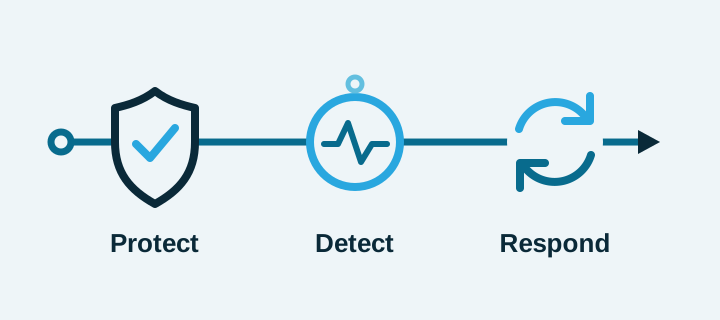
An alert must lead to action. A backup must support recovery. Access rules must follow changes in your team. We connect these elements to make security practical in everyday work.
Management has clear priorities and visibility of progress. Security rules, roles and supplier responsibilities are defined so that everyone knows what they need to handle.
We inventory devices, software, sensitive data and essential services. This helps identify dependencies, assess risks and focus effort where it matters.
Access management, stronger authentication, updates, network segmentation and data protection form a common foundation. Clear guidance and staff awareness complement the technical measures.
Important events are logged and relevant alerts identified. We organise their review and escalation to the right contacts, according to the tools and monitoring arrangements agreed.
Contacts, roles and initial actions are prepared: assess the incident, limit its spread, preserve useful information and coordinate communication. Exercises help verify these arrangements.
Backups are protected and restoration is tested. Services, recovery order and target times are defined according to your needs, then adjusted using lessons from tests and incidents.
We identify the activities to protect, the systems and data they depend on, existing safeguards and the risks to address.
Together, we define a security architecture and an action plan. Technical measures, working practices and responsibilities are put in place in a coordinated way.
Checks, restoration tests and incident exercises help assess the measures in place. Their results guide improvements and the agreed ongoing review.
The approach is gradual. We first define the target and priorities, then plan the work around its dependencies. Each stage contributes to the whole and is checked.
Management approves priorities and resources. Designated staff help define working practices, procedures and exercises. Sumatoni carries out the agreed technical work and coordinates the people involved.
Yes. We assess their configuration, coverage and integration. Suitable solutions are retained; changes address the gaps identified and the chosen architecture.
Reviews cover completed actions and their effectiveness: access reviews, vulnerability management, alert assessment, restoration tests and exercises. Results help revise priorities and document progress.
We start with your environment and priorities to define the protection, organisation and ongoing review your business needs.
Review your security